Category: Films

  • ‘The Longest Yard’ remake can’t match the original classic

    ‘The Longest Yard’ remake can’t match the original classic

    Nelly (left) and Adam Sandler star in ‘The Longest Yard’

    The trend of Hollywood to continue to remake successful films is truly disturbing, particularly in light of the inability of these remakes to come close to the quality of the originals. The Longest Yard is the latest in this series of remakes and for whatever reason it doesn’t even begin to emulate the classic film being remade. It goes in a different direction entirely.

    In the original, Burt Reynolds played Paul “Wrecking” Crewe, a has-been NFL quarterback who had once been the league’s Most Valuable Player. In the remake, Adam Sandler has been miscast as this character, but the character has been changed. The Crewe played by Reynolds was a jerk, with a very jagged edge to him. Sandler’s Crewe lacks this edge and while both are has-been drunks being kept by wealthy women, they are even different types of drunks. Reynolds’ Crewe is a mean drunk, spiteful and angry at the world. Sandler’s Crewe is a mirthful drunk who laughs at himself and everyone around him, especially his angry girlfriend (Courtney Cox).

    In both films, Crewe takes the expensive auto of his girlfriend without permission and she reports it stolen, and in both cases, Crewe destroys it, although the way in which they do is different and again shows the difference between the two. Reynolds dumps the auto into the bay, while Sandler manages to have half a dozen police cruisers smash into the car while he is in it, although he escapes unscathed.

    The prison settings are different, a Florida swamp in the original and the dry Texas outlands in the remake. The late Eddie Albert was brilliant as Warden Hazen in the original and James Cromwell is not up to the task in the remake, although he gives it his best effort. Warden Hazen has pulled strings to get now inmate Crewe assigned to his prison in order to serve as a consultant to the semi-professional football team made up of prison guards. The head guard, Captain Knauer (William Fichtner in the remake, Ed Lauter in the original and both are good), runs the football team and he doesn’t want any interference from either the warden or an NFL has-been. Of course the Warden isn’t happy over this turn of events and he instructs Captain Knauer to convince Crewe to see the light and assist the team. Once this happens, Crewe suggests that what the team needs is a tune-up game before the season begins and Warden Hazen has a brainstorm: a game between the prison guards and the convicts.

    When you are seeing a remake and you’ve seen the original, you expect the classic moments from the original to be either done again or improved. Cloris Leachman replaces Bernadette Peters as the warden’s secretary and Crewe’s fifteen minute encounter with her is there, although certainly not in the way it was in the original. The football game covered 47 minutes in the original and in the remake it only uses 36, but the remake’s football sequences are some of the best moments it has.

    Nelly portrays a running back and his performance is probably the best in the film. I haven’t mentioned Chris Rock’s reprisal of Jim Hampton’s portrayal of the pivotal role of Caretaker, simply because he didn’t do anything worthy of mention. On the other hand, Burt Reynolds was pretty good in the beefed up role of Nate Scarboro, originally portrayed by the late Michael Conrad.

    There are a few humorous moments in this film and the classic lines are still there, but you’d be far better off renting the original The Longest Yard from your local DVD store and watching it in the privacy and comfort of your own home. You’d save a few bucks, too.

  • ‘Star Wars Episode III: Revenge of the Sith’ fails to make the grade

    ‘Star Wars Episode III: Revenge of the Sith’ fails to make the grade

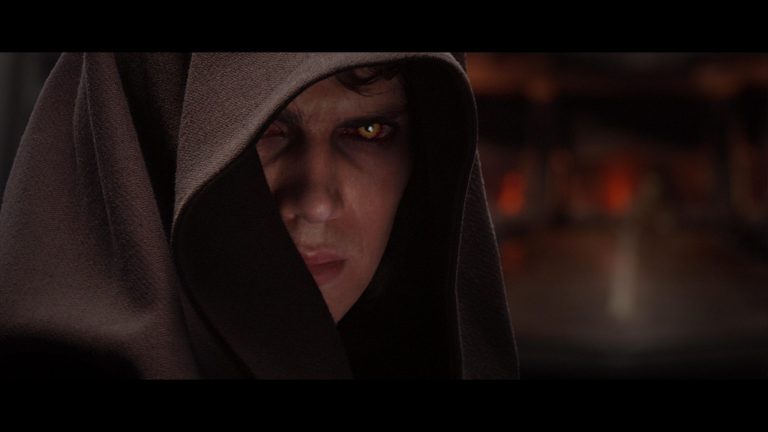
    Anakin Skywalker (Hayden Christensen) goes to the Dark Side in ‘Star Wars: Episode III – Revenge of the Sith’

    At risk of having my sci-fi fanclub card revoked, I feel obligated to tell the truth: As a stand-alone movie, Star Wars Episode III: Revenge of the Sith disappoints, offering up a sprawling spectacle of sparkle to mask a story populated by lifeless characters who speak painfully unnatural dialogue.

    That said, unless you’ve been in a persistent vegetative state for the past 28 years, you’re aware that Revenge of the Sith isn’t a stand-alone movie. It’s simply one episode in an epic series that seeks (successfully, I think) to encompass all the big themes, big heroes, big villains and big battles a viewer could hope to find in a story. 

    In short, the series gets high marks, while Episode III barely makes a passing score.

    There’s a handful of things Episode III gets right. John Williams’ score soars. Ian McDiarmid’s performance as Supreme Chancellor Palpatine/Darth Sidious is, at turns, engagingly earnest and diabolically creepy. Christopher Lee’s dedicated Sith warrior, Count Dooku, makes a laudable, albeit short, appearance, and Yoda (voiced, as always, by Frank Oz) is delightful as a Jedi Master at the height of his powers. 

    Ewan McGregor’s Obi-Wan Kenobi finally begins to demonstrate some of the vibrancy and character later embraced by Alec Guinness’s wry and world-weary old Jedi. Knowing the “Old Ben” of Episode IV, it’s heart-warming to watch the young Obi-Wan choose mossback creature transport when others might select shiny mechanical ride and see him kvetch over having to use a blaster when his lightsaber isn’t at hand.

    Unfortunately, the on-target performances and character choices are tangential to two deeply flawed relationships at the movie’s core.

    While the bond of brotherhood between Anakin and Obi-Wan is key to Anakin’s development and eventual downfall, the audience never really finds a convincing moment at which a betrayal is clearly translated. Anakin’s sudden, vigorous hatred for his closest friend comes off as more confusing than heartbreaking.

    Maybe more problematic is the romance between Anakin and Padmé. Although Director/Producer/Writer George Lucas clearly sees this pair as sharing a profound bond that eclipses the characters’ other important responsibilities and commitments, the audience is treated to a vision of the most insipid, humorless couple in the galaxy. 

    Granted, these are dark times, but dark times call for dark humor. Lacking the charisma and sexually charged repartee of Han Solo and Princess Leia’s interactions (Episodes IV and V), we see a young man who paces, broods and fawns over a woman who does nothing but preen and stare winsomely off her penthouse balcony. She looks so unmitigatingly bored, one wonders why she hasn’t any senatorial paperwork to complete. Their conversations, far from daring and romantic, reveal Lucas’ awkward attempts at earnestness with plodding “I love you more!” “No, you couldn’t possibly, because I love you more!” exchanges.

    Even with all the spectacular saber-swinging in the galaxy, Episode III never even approaches the passionate, dynamic moments seen in The Empire Strikes Back (Episode V). Though Han’s fate trapped in a frozen block of carbonite rips the guts out of a generation of fans, Obi-Wan’s final abandonment of Anakin leaves us cold.

    There are times when an artist relentlessly pushes his enormous vision to fruition, ultimately creating something splendid. I believe Lucas does this on the Star Wars series’ larger scale through close attention to archetypal heroes, mythical storytelling and the 1940s sci-fi serials he riffs on. Over the long haul, he makes Star Wars into a rich galaxy of characters with lives full action and adventure, romance and redemption. 

    The whole is undeniably greater than the sum of its parts, and Episode III isn’t the weakest link in the chain (a title which I’d argue goes to Episode II, Attack of the Clones). Sadly, it seems our stargazer could have used a few fewer yes men and a few more talented collaborators to help polish this piece of the epic into gem unto itself.

  • ‘Mad Hot Ballroom’ is a delightful crowd-pleaser

    ‘Mad Hot Ballroom’ is a delightful crowd-pleaser

    The stars of ‘Mad Hot Ballroom’ are the students

    New York is a town that generally frowns upon the concept of prolonged eye contact. City kids learn early that locking eyes with someone is tantamount to a challenge. The deep stare is a bold move liable to provoke at the very least, annoyance (“Whadda you lookin’ at?”) or, more frighteningly, threats (“You lookin’ at me?”). 

    In light of this cultural characteristic, it seems improbable that since 1994, the American Ballroom Theater’s Dancing Classrooms program has insisted that thousands of eleven-year-old New York City public school kids not only lock eyes with each other, but swing their hips, hold hands, bow, curtsy and flash big, toothy grins — all in the name of the seemingly anachronistic art of ballroom dance.

    Mad Hot Ballroom documents this program’s surprising success and popularity, wisely capitalizing on the beguiling charm of its stars — the students themselves. 

    Watching a healthy amount of time spent at dance practice, we initially see our young protagonists struggle with rhythm, historical background and some awkward physical positioning that includes all that afore-mentioned eye contact. As this footage is supplemented with interviews, candid after-school snippets and a few background details supplied by instructors and school faculty, we see that the strange artificialities of ballroom dance unlock a real wealth of benefits, ranging from pride and poise to the arts of cooperation and compromise.

    Claudia Raschke-Robinson’s unobtrusive camera work captures all the qualities we love most about pre-teen kids. From towering elation to crestfallen dejection, we watch these kids unabashedly feel their way along the emotional spectrum. We listen to the endearing exuberance and terrifying honesty that flows through their conversations, and realize, with a little sadness, that the years of adolescent indifference and detachment loom just down the road. 

    Though it’s clear the program is conducted citywide, Director Marilyn Agrelo and Writer Amy Sewell divide screen time between three schools: P.S. 112 in Bensonhurst, TriBeCa’s PS150, and Washington Heights’ PS115. While the film’s most charismatic kids are based in TriBeCa and Bensonhurst, the comparatively poor Washington Heights team ultimately carries the lion’s share of the film’s drama, thanks to a Cinderella-story narrative arc and the force of will embodied in Yomaira Reynoso, the team’s doggedly determined teacher/advisor.

    Mad Hot Ballroom shimmies between schools to capture the wit and confidence evident in TriBeCa’s kids, the good-natured appeal at Bensonhurst, and the Washington Heights team’s competitive focus.

    If there’s criticism to file, it’s born of these shifts, which promenade our attention from one child to the next, foxtrotting over any sticky issues that lay in the subtext. This technique gives the film an entertaining levity, but robs it of any potential deeper meaning or true commentary. This is a minor objection, because ultimately, Mad Hot Ballroom turns out a delightful crowd-pleaser that merengues, foxtrots, swings, rumbas and tangos across the screen, daring its seat-bound audience not to twitch along with in time.

  • ‘Revenge of the Sith’ has beautiful action, but suffers from wooden words

    Hayden Christensen and Ewan MacGregor in ‘Star Wars: Episode III – Revenge of the Sith’

    Since I am fortunate enough to live in Los Angeles I had hoped to see Star Wars: Episode III – Revenge of the Sith at the historic Chinese theatre. Sadly, this was not to be, as the powers that be chose not to open the film there for whatever reason, disappointing the legions who lined up there hoping to convince them to change their minds. Instead I purchased advanced tickets to see this gem on opening day at the world-famous Cinerama Dome with its 83 foot wide curved screen. It was disappointing to note that not all of the performances were sold out on opening day, but I blame that more on the choice to open the film on so many screens across the area rather than the choice of people to come see the movie in Hollywood, particularly on a weekday afternoon when traffic is a consideration.

    The ushers did their best, but there were several Darth Idiots to contend with who insisted on playing with their new light sabers ($16.95 with batteries included in the lobby), disrupting the trailers that were shown before the movie began. Happily, I think they understood that they probably faced the wrath of many of us who wanted to be able to focus on the screen without distraction and refrained from using their toys once the opening credits were complete.

    With prequels and serials you know where the story left off and where it is going, so I am not going to tell you a lot and particularly intend to avoid spoilers. Suffice it to say that storywise, this is the best of the first three episodes, as Director/Writer George Lucas weaves a tale worthy of his talents with sufficients twists and turns to keep the audience on the edge of their seats in the brief lulls between the wonderful action sequences.

    And it is action that Lucas does best, perhaps better than anyone else. The battle sequences are magnificent, whether they involve ship against ship or warrior against warrior. It is when battles change from weapons to words that Lucas loses his way. If only his strength of story and character arc were present in his ability with dialogue as well.

    The Republic, still led by Chancellor Palpatine (Ian McDiarmid) is still at war and the Jedi Knights are leading the Republic’s clone forces in battles throughout the galaxy in an attempt to defeat the separatists who are being led by General Grevious, who has just kidnapped Palpatine himself. Obi-Wan Kenobi (Ewan McGregor) and his apprentice Anakin Skywalker (Hayden Christensen) are dispatched to rescue the chancellor before Grevious can spirit him away.

    As a director of actors, Lucas manages to evoke performances of varying degree from them. McDiarmid is ordinary in a role that could have been much more. Ewan McGregor is brilliant as the younger Obi-Wan Kenobi, who is portrayed in Episodes IV through VI by Sir Alec Guiness. His passion and zeal as a Jedi Knight dedicated to preserving the freedom and liberty of the Republic are evident throughout everything he says and does, and he lets it all hang out in his final confrontation with Anakin. Natalie Portman’s performance as Padme Amidala may be physically restrained by the fact that her character is pregnant with the twin children of Anakin, but that doesn’t keep her from delivering just the right emotional note, time and time again.

    However it is Hayden Christensen who truly shines through as Anakin Skywalker/Darth Vader, who is passing through that transformation from good to evil, and for what he would argue is the purest of reasons: true love. While I doubt the Academy of Motion Picture Arts and Sciences will view his performance as worthy of a nomination at award time, so far in 2005 it is one of the finest performances I have seen. The love that drives him to the dark side of the force isn’t just written on his face, it is a part of every fiber of his being. He manages to display all of his emotions, often without a single word being required to let us know what he is feeling. This is a rising actor who is truly at the top of his game in this movie.

    Again, not to say that Episode III is perfect, it isn’t. There is a battle scene where three Jedi are killed much too easily and the only reason that this could have happened is that Mr. Lucas needed to speed the scene up for expediency’s sake. I may be harping on the horrid dialogue, but there are moments when it is truly wooden. However, Episode III is leaps and bounds better than Episodes I and II and left me wishing that somehow, someway Episodes VII through IX would someday be made. There are some who believe it will happen. George Lucas is a multi-billionaire and he is the kind of straightforward person who says what he means and means what he says. He says it won’t happen.

    Sadly, I believe him.

  • Daniel Craig explodes in ‘Layer Cake,’ a smart, slick flick that rarely stops moving

    Daniel Craig explodes in ‘Layer Cake,’ a smart, slick flick that rarely stops moving

    Daniel Craig and Colm Meaney in 'Layer Cake'
    Daniel Craig and Colm Meaney in ‘Layer Cake’

    I’m not sure why, but the Brits seem obsessed with fast-paced, super edited crime thrillers where there are no real good guys, just a bunch of bad guys trying to one-up each other.

    That’s pretty much the concept behind Layer Cake, but that doesn’t mean it’s not entertaining. In fact, it’s actually a pretty good movie.

    Daniel Craig stars as a middle man in the drug trade in England. Along with his crew, they successfully distribute and sell their product for their boss, Jimmy. But Craig’s character (whose name is never revealed) is planning to retire. He’s made a lot of money, and is looking to get out of the business. But Jimmy delivers one last task: find Charlotte Ryder, an old friend’s daughter.

    While he struggles to locate the girl, his crew is also tasked with examining the quality of two million pounds of ecstasy, which turns out to be stolen from a gang of neo-Nazi killers. Twists and murders come at every turn, keeping Craig’s character on the run for his life.

    Left to right: George Harris, Colm Meaney and Daniel Craig co-star in 'Layer Cake'
    Left to right: George Harris, Colm Meaney and Daniel Craig co-star in ‘Layer Cake’

    I liked this movie. It was smart, slick and rarely stopped moving. Craig does a great job as the man with no name. In fact, everyone in the cast turns in a crisp performance, including Colm Meaney, one of my favorite actors from Star Trek: Deep Space Nine. He’s one of the few people to grace a Trek series that has managed to retain a varied career.

    Meaney is not the only Trek vet in Layer Cake. Although I shiver to even mention it, Tom Hardy, who plays Clarkie, a member of Craig’s crew, played the evil Picard clone, Shinzon, in Star Trek: Nemesis.

    There’s a dark, cynical tone to Layer Cake that is pervasive in most crime thrillers that come from England. But it still works, and a large part of that is due to the cast. George Harris, whose been in quite a few things I’ve caught lately, would probably be most recognized as the boat captain in Raiders of the Lost Ark (he was also recently in The Interpreter). His character is the most complex, and was a stand out performer for me.

    I say he was the most complex because while other characters like Craig’s man with no name and Meaney have more screen time, both are pretty much as you see them. Although their pasts are largely mysterious, you know who they are from the very beginning. With Harris’ Monty, you’re not too sure what he’s about. Plus, there’s one scene in particular where he beats the snot out of a homeless man, where you begin to understand that this is the only character who has depth.

    As for the rest, they are who they appear. There isn’t any complexity to them, and quite honestly, there doesn’t need to be. Layer Cake itself is complex enough, with nothing but twists and turns, right up to the very end.

  • ‘Enron: The Smartest Guys in the Room’ damns the execs, ignores the victims

    ‘Enron: The Smartest Guys in the Room’ tells a damning story of corporate greed

    “Ask Why.” It was Enron’s leading promotional tagline. Maddeningly, if the colossal debacle that is the Enron story has a moral, the lesson to be learned also appears to be “ask why.” 

    Based on The Smartest Guys in the Room, a best-selling analysis by Fortune magazine reporters Bethany McLean and Peter Elkind, Enron: The Smartest Guys in the Room presents a morbidly compelling look at the Darwinian economics and cutthroat business philosophy that birthed a company constructed with smoke and mirrors and run on moral corruption. 

    The beauty of writer/director Alex Gibney’s film is in the sense it makes of the (intentional) information mire Enron used as a business model — a mire that muddied even the aftermath of the scandal. When the company crashed in August, 2001, the greater part of the American public was left with a fuzzy information hangover. 

    We knew about the rolling blackouts in California. We saw the boxes and boxes of shredded paper carted out of the Arthur Andersen accounting offices. We knew Enron had something to do with energy and maybe something to do with direct TV. We knew Enron had big bucks and slick commercials. The hard part was putting a finger how all that tied together. Enron does this well, avoiding that big stumbling block one needs to address in making a paper trail doc like this one — how do you get a movie audience to sit through 150 minutes of suited white guys talking? 

    Gibney moves his story along on the backs of the antagonists themselves, Enron executives Ken Lay, Jeffrey Skilling, Andy Fastow, and to a lesser extent, the late Cliff Baxter, who committed suicide as Enron’s house of cards collapsed. This decision is generally a good one, although it ultimately makes the story lopsided. While we’re treated to a lengthy look at the executives, the victims of Enron’s white-collar crimes are bit players, swept aside in the retelling almost as much as they were in the real story.

    A minor storytelling judgment lapse also arises during Enron Energy Services CEO Lou Pai’s subchapter, in which we learn (news flash!) that high-powered executives enjoy the services of strippers. A healthy amount of screen time is spent in a strip club while we learn how this chilly intimidator spent his off hours, a choice that doesn’t work to advance the story or tell us anything.

    Overall, Gibney treats his material with a light touch, editorializing in little more than clever musical lead-ins and pithy chapter headers. The most damning commentary Enrondelivers comes straight from the mouths of the executives and traders, via corporate audio and video clips. 

    In these conversations we hear the nervy arrogance in their voices and understand the hubris with which they justified their evil deeds. These are men who literally (yes, you can hear them) laughed while California burned during 2001’s season of rolling blackouts, actively shutting down power companies to feed on the resulting price spikes. 

    Enron’s tale of power and corruption brought down by pride and avarice has the makings of great dramatic fiction. With a small army of larger-than life enemies threatening scores of ordinary, everyday people, what’s really missing here is a knight in shining armor, and that may be the most alarming aspect of Enron. The bad guys pillage, the people suffer, and we’re all left with the realization that it can (and likely will) happen again unless watchdogs watch and the rest of us care enough to ask why.

  • Birol Ünel and Sibel Kekilli are great together in ‘Head-On’

    Birol Ünel and Sibel Kekilli are great together in ‘Head-On’

    Birol Ünel stars in 'Head-On'
    Birol Ünel stars in ‘Head-On’

    Cahit (Birol Ünel) is a 40-year-old self-destructive drunk. To pay the bills, he picks up empties at a nearby club — often finishing the abandoned beers himself. He snorts coke when he can, he looks like a grungier version of Benicio Del Toro, and his apartment in Hamburg reaches levels of filth I never saw in four years of fraternity life. So it’s not much of a surprise when, during one bender, he totals his car by driving it into a brick wall.

    As he recuperates, Cahit meets Sibel (Sibel Kekilli), a pretty young Turk whose recent wrist-slashing has landed her in the hospital. Frustrated that her family is keeping her from enjoying sex, drugs, and rock ‘n’ roll, she’s looking for any way out of her protective bubble of a life. Her Muslim parents, in turn, seem more concerned about how the suicide attempt affects the family’s honor than they do about Sibel’s well being.

    For those not gifted with intuitive skills, Head-On, a film that swept the German Oscars and is being prepared for American release, is not always a cheerful movie. Directed by Fatih Akin (yeah, the name doesn’t ring a bell for me, either, but then I’m way behind on my German cinema), Head-On is the moving story of Cahit and Sibel, both Germans with Turkish roots, who enter a marriage of convenience so Sibel can get drunk and date others away from the watchful eyes of her parents. Eventually, their own love story develops, but not before the repercussions of Sibel’s free-spirited ways and Cahit’s proclivity for drunken violence land Cahit in jail. Disowned by her family — apparently, whoring around town when you’re married is another cause of familial dishonor — Sibel moves to Istanbul, promising to wait for Cahit.

    But the movie is more than the story of two characters; Akin also delves into the clash between Muslim and Christian cultures. Head-On shows us three generations of Turks in Germany and, genuinely enough, gives us no solution to the problems that arise at this difficult intersection. At every possible clash of themes — social freedom versus strict religion, a woman’s career versus her marriage, love versus impatience, love versus jealousy, love versus responsibility — Akin consistently dodges happy compromise and gives us gritty reality. And here’s a hint: love, which is up against a lot, doesn’t always win.

    Deep cultural commentary aside, Head-On is at its best when the focus is its two stars. Akin deftly explores how love can help two people too self-destructive to survive without each other, and the result is both sad and beautiful. Ünel, who wears a lifetime’s worth of sorrow on his rugged face, and newcomer Kekilli each turn in powerful performances that range from dark to joyous. Their chemistry and the slow development of love in their characters are so engrossing that the film stumbles when prison and international borders separate them. By the time Cahit is finally released back into society, it may be too late to resurrect his once-budding relationship with Sibel. Likewise, it may be too late to make this very good movie great.

  • ‘Finding Neverland’ is the rare film which has pitch-perfect acting and writing

    ‘Finding Neverland’ is the rare film which has pitch-perfect acting and writing

    Johnny Depp and Dustin Hoffman in 'Finding Neverland'
    Johnny Depp and Dustin Hoffman in ‘Finding Neverland’

    Ahh, Los Angeles in January… It is a most glorious time of year when our attentions turn collectively to Awards Season©. It is a time when Variety and The Hollywood Reporter do their best work, serving as mere staples for a throng of “For Your Consideration” studio ads.

    As there is no subject on the planet that is more scrumptious than the self-indulgent doling out of Hollywood statuettes, I’ve decided that this review of Finding Neverland shall be the first article in a series that will cover the major films likely to be talked about and scrutinized throughout the Awards Season© at water coolers all around the Fly-Over States.

    Finding Neverland is a rare film that beautifully if not flawlessly tows the line between genuine heart and saccharine sentimentality. Pitch perfect acting and writing throughout the film elevate it to an extraordinary level, well beyond where it could have easily fallen at the hands of lesser talents. A film like this, one that deals with real people, their lives and deaths, is so often portrayed with such overly manipulated drama such that the audience is beaten down with every emotion as if we had the intelligence of a brain dead otter. See Patch Adams for reference. Finding Neverland avoids those bio-pic landmines with panache and ease, and is in singular company as the second best movie of 2004.

    At its core, Finding Neverland is the pseudo-biographical account of J.M Barrie, and his journey into the imagination that ultimately led him to write Peter Pan. We meet Barrie, performed exquisitely by Johnny Depp, in the real world of London as a playwright who needs a hit, and as a husband who might need for some marriage counseling. Soon, on a jaunt to break his writer’s block, he is introduced to the Davies kids and their loving but ill widowed mother, Sylvia, played consummately by the radiant Kate Winslet.

    From left to right: Freddie Highmore, Joe Prospero, Johnny Depp, Nick Roud, Kate Winslet and Luke Spill star in 'Finding Neverland'
    From left to right: Freddie Highmore, Joe Prospero, Johnny Depp, Nick Roud, Kate Winslet and Luke Spill star in ‘Finding Neverland’

    With the aid of the children’s inherent grand imaginations, Barrie’s spirit breathes life into the Davies’ world. This essence most noticeably pervades into Peter Davies, the child who doesn’t trust adults, and is in due course the direct inspiration for Pan. Barrie’s introduction into the Davies’ family proves to be instrumental in saving the imagination (and therefore lives) of Barrie and Sylvia. As he spends time with the family, Barrie pieces together the story and characters for Peter Pan. Some of these moments and realizations are truly inspired, albeit a bit set up. In the end, imagination is replaced by love as the saving grace of humanity. As a sentence like that, it looks horribly maudlin, but believe that in the film it is done with such subtlety it is undeniably beautiful.

    For a film that is so deeply rooted in the significance of the imagination, it is amazing how brilliantly it pulls of the very sober and very real emotions of human life. Barrie’s professional and personal lives are complicated; neither his marriage nor his writing are going well. Sylvia Davies, as a widower, single mother of three, and seriously ill woman is in a constant internal struggle; she has a house and family to attend to in good spirits, and as such cannot afford the luxury of melancholy nor illness. The time Barrie and Sylvia spend together is a genuine respite for both characters. Another entire facet to the reality Finding Neverland brings is that of the writer’s journey. Rarely if ever has there been a portrayal of a writer’s creative struggle and path so rich and accurate. How many of us have read something and uttered, “How in the world did he come up with this?” Not that this answers that question with any sense of accuracy, but it does pose possibilities that are fantastic. On some level, it restores faith to writers everywhere that inspiration is as close as you’ll allow it to be.

    Without overtly pulling strings, Finding Neverland pulls off the near impossible. It is a fine story on which to hang fantastic writing and even more brilliant acting. For a film that could so easily have become sappy hokum, Finding Neverland finds itself in a rarified stratum as one of the best films of the year.

    **AWARDS NOTE**

    As much as I respected and enjoyed Finding Neverland, it was released in the same year as another film, which, in almost every category, steals its sunshine. I would give Finding Neverland the award for Best Adapted Screenplay and Best Supporting Actress (Winslet). She is getting two statues at my ceremony. Sadly, Johnny Depp, who turns in a brilliant performance, will find that this is not his year at the real Hollywood awards, nor here in these.

  • Clint Eastwood’s ‘Mystic River’ is richly performed, beautifully executed

    Clint Eastwood’s ‘Mystic River’ is richly performed, beautifully executed

    Kevin Bacon in 'Mystic River'
    Kevin Bacon in ‘Mystic River’

    Deeply nuanced performances breathe reality into the film’s somewhat tried plot devices, and ultimately overshadow a director’s visible manipulation and a studio’s heavy handed marketing to deliver an intensely satisfying film.

    I missed the release of Mystic River in theaters last year, primarily as a direct result of the pretentious marketing, which seemed to be aimed solely at the Academy and the Foreign Press Association, rather than the majority of the viewing public. The campaign worked, landing the film with accolades and Oscars. That alone solidified my predisposition to dislike the film, or more over write it off completely. I don’t like being told by the first stream of advertisements that roll out of a studio how well their film was reviewed. It would be like throwing an ad out there that proclaimed, “The number 1 movie in America is…” two weeks before it’s released. Let my peers and I have a chance at it before being throttled with Oscar buzz. It just bothers me. Ray is this year’s Mystic River for me. I’m just annoyed that the collective have decided for me that Jamie Foxx’s performance is “dynamite.”

    That said, I knew from my time in the studios and corridors here in Hollywood that I was being dismissive of “probably Eastwood’s best work since Unforgiven.” After a few weeks in release, most of my peers had seen and liked Mystic River. It became part of the collective conscious, and an almost embarrassment to not have seen it. So I nodded in those halls and on those sets, and said the requisite, “Yeah, Sean Penn was incredible…I can’t believe the performance he pulled from Laura Linney…”

    Time passed and the film was overtaken by the incessant Onslaught of the New. Only yesterday I was walking through a major video store chain when I saw the film for sale as a Previously Viewed DVD for $5. It seemed so long ago that I first even thought of the film with the ridiculously unimaginative and ineffectual title. So, I bought it, and watched it free of the prejudice and distaste I had from a full year prior:

    Mystic River is primarily the story of three men who have collectively experienced a trauma in their childhood. Technically, just one, Davie (Tim Robbins), actually experienced the ordeal. Sean and Jimmy (Kevin Bacon and Sean Penn) witnessed a piece of it, and often reflect how their lives might be different had that moment in their past been different. This incident in their collective past proves to be the tie that binds old friends. As adults, Sean is a cop, Jimmy owns the corner store, and Davie is still apparently coping with his damaged psyche. Jimmy has a family of his own, including a 19 year old daughter who goes off and gets herself shot and ultimately beaten to death. Of course, Sean is on the case and, why not, Davie is a lead suspect. The film from here follows Sean and Jimmy as they try in their own ways to track down the killer, as well as Davie who is fighting his own demons and remains a suspect. There are a few plot twists along the way, as you’d expect, and an ending that is certainly rewarding.

    Sean Penn delivers in 'Mystic River'
    Sean Penn delivers in ‘Mystic River’

    The acting was without question quite brilliant, and indeed award-worthy. The best compliment one can give for the performances of Sean Penn and Tim Robbins specifically is that you forget completely their personal politics and therefore personal reasons to dislike them. Personal politics can tint a performance, and conscious of it or not, we’re all victims to the same judgments. Sean Penn was real in his portrayal of the ex-con/patriarch who loses his daughter. He buried himself in the role, and you can see in his eyes that his grief, anger, and angst are real. Kevin Bacon and Tom Robbins also handed in some of the best performances of their luminous careers, and that is saying something. Along with the cast, Brian Helgeland’s ear for dialogue truly deserves accolades for shifting a relatively formulaic mystery into a thoroughly nuanced drama.

    The flaws in Mystic River lay squarely at the feet of Clint Eastwood. The three easiest fish to shoot in this barrel are the score, the camera work, and the editing. The score, which he composed, never seems to fit right. Mike Figgis comes to mind as one of the only great directors who can accurately score his own film. It is too often the case that this score feels like it was written for a different film. The shot selection came across as plain and obvious, without many touches of flair from a well-planned move, rack or angle. It felt at times almost as if Eastwood and his DP decided intentionally to use the camera sparingly to drive the tone. As if he saw the strength of his performances, and thought they would overshadow the rudimentary camera direction. He would be wrong in this case, as it was palpable how little the camera played into any given scene. Not that all films should need to always have interesting lenses, camera angles and moves — this is not Fight Club after all — but in this case the mystery inherent in the plot was subdued due to lackluster camera work. The same can be said about the editing, which was paced well, but perhaps too obvious for it’s own good. The red herring in the picture, which is the film’s primary plot device, is fundamentally obvious based on the cutting. That’s not to say you won’t be surprised by at least one of the twists, but the main plot device is flatly obvious. None of this even touches the rampant overuse of the slow cross-dissolve, the broadsword of the overly manipulative director.

    Mystic River is not a classic, by any means, but upon viewing it was easy to see the reasons so many people, critics and associations really liked the film. They were all right. It was clearly (with the luxury of hindsight) one of the best films of last year, due unmistakably to the performances of Penn, Bacon, Robbins and Linney. Sure, there was plenty wrong with the film, which is why I believe it won’t stand up to the aforementioned Onslaught of the New. It certainly won’t become a classic like Lord of the Rings or Eternal Sunshine of the Spotless Mind. While it may not have that longevity, it will always boast some of the best acting caught on film in the early 2000s, and even if it will be forgotten, at least it will forever have a page in any Oscar almanac.

  • ‘The Life Aquatic with Steve Zissou’ has intriguing characters, beautiful dialogue and nuanced performances

    ‘The Life Aquatic with Steve Zissou’ has intriguing characters, beautiful dialogue and nuanced performances

    The cast of 'The Life Aquatic with Steve Zissou'
    The cast of ‘The Life Aquatic with Steve Zissou’

    Recently I went on a couple of dates with a beautiful blonde who may or may not have been out of my league. We got along well, I made her laugh, and I thoroughly enjoyed the making out (and the potential for more). But abruptly, after the second date, my phone calls went unreturned. Now, I’m not one to bear ill will at such an early stage, so the experience left me with nothing to say but a declarative “Huh”. I enjoyed the time that we had, but I ended up feeling like there was something that I missed.

    Which is the exact feeling I got after watching Wes Anderson’s most recent film, The Life Aquatic with Steve Zissou. A quirky, character-driven film with a similar narrative arc to Anderson’s previous The Royal TenenbaumsThe Life Aquatic is an engaging, imaginative comedy that — strangely — leaves the viewer unsatisfied. It is, in short, an enjoyable date that doesn’t call you back.

    Bill Murray is the title character in 'The Life Aquatic with Steve Zissou'
    Bill Murray is the title character in ‘The Life Aquatic with Steve Zissou’

    Bill Murray stars as the title character, a flawed, self-centered Cousteau past his prime out for one last voyage to avenge his partner, eaten alive by a never-before-documented Jaguar Shark. Along for the adventure are Owen Wilson as a commercial pilot from Kentucky who might be Zissou’s son, Cate Blanchett as a pregnant reporter fancied by most of the crew, Willem Dafoe as the German second mate, Anjelica Huston as Zissou’s estranged wife, Jeff Goldblum as a far more successful and better-funded marine adventurer, and an offbeat crew consisting of interns from the University of North Alaska, a Bowie-loving Portuguese sailor, and a “stooge” from the financier bankrolling the adventure. Team Zissou encounter – and overcome – pirates, financial snags, mutiny, and romantic entanglements en route to a successful aquatic documentary and Captain Zissou’s acceptance of leadership and responsibility.

    As with all Anderson films, the characters are intriguing, the dialogue is beautiful in its reality, and the performances are noteworthy and nuanced. Dafoe, too often used as a sneering bad guy, steals scenes as Klaus, an angsty Teutonophone craving Zissou’s attention. Blanchett captures all the elements of expectant mother, dutiful reporter, rejected lover, and hopeless romantic, and my opinion that she greatly outshines her romantic interest Wilson is probably colored by my unfair weariness of seeing Owen Wilson in Wes Anderson films. Murray shines, too; he has the market cornered for characters combining world-weary whimsy and egomania.

    However, perhaps it is the Murray whimsy, or maybe it’s the intentionally cheesy (but charming) computer-generated fish, but Anderson fails to articulate the gravity of a pirate attack, gunshot wounds, and even death. It is here that The Life Aquatic fails: despite being consistently funny, despite Anderson’s gift for the subtleties of human interaction, and despite the gorgeous climax in a crowded submersible, the “action” that the film ultimately hinges on feels out of place and not at all dangerous. Anderson cinephiles may counter that the underlying message is that real drama lies within human contact and not gun battles, but it’s just a fanciful excuse for an enjoyable film that leaves the viewer saying “Huh”.