Tag: Johnny Depp

  • Tail Slate recasts 1968’s ‘The Green Berets’

    Tail Slate recasts 1968’s ‘The Green Berets’

    TailSlate proudly presents our recast of…

    It has been almost exactly 50 years since the late Roger Ebert wrote the following about The Green Berets, John Wayne’s jingoistic film about Special Forces soldiers serving in Vietnam:

    “The Green Berets” simply will not do as a film about the war in Vietnam. It is offensive not only to those who oppose American policy but even to those who support it. At this moment in our history, locked in the longest and one of the most controversial wars we have ever fought, what we certainly do not need is a movie depicting Vietnam in terms of cowboys and Indians. That is cruel and dishonest and unworthy of the thousands who have died there.

    One of the few films about the Vietnam War actually produced during that conflict, it was an adaptation of Robin Moore’s book of the same title.  Moore actually went through the Special Forces “Q” qualification course and airborne training prior to deploying to Vietnam with a Special Forces unit.

    When John Wayne sought the cooperation of the Department of Defense and then President Lyndon B. Johnson, they insisted that Moore not be involved in the production of the film.  The government was attempting to prosecute Moore for allegedly revealing classified information in his book but that ended when Wayne began production.  Now, TailSlate recasts The Green Berets.

    John Wayne as “Colonel Mike Kirby” in The Green Berets

    Wayne was 60 years of age when production began, much older than the typical Special Forces Colonel.  His physical conditioning was also not that of the average Special Forces operator.  We are going to go with an actor in his mid-50s who can carry off the appearance/physicality of a Green Beret officer.

    Johnny Depp in Murder on the Orient Express

    Johnny Depp will need a “top-kick” just like John Wayne’s Colonel Kirby had Aldo Ray as “MSGT Muldoon”.

    Aldo Ray and John Wayne in The Green Berets

    We’re going with an actor who has experience portraying a senior noncommissioned officer.  As Command Master Chief “John James Urgayle,” Viggo Mortensen is ideal for this role.

    Viggo Mortensen in 1997’s G. I. Jane

    David Janssen was a major TV star at the time The Green Berets went into pre-production.  The final episode of “The Fugitive” in which he starred, aired while he was working on The Green Berets.  As “George Beckworth, he played a liberal journalist who was vehemently opposed to the U.S. involvement in Vietnam; but his attitudes were changed once he saw what was really happening there (really being of course based on Wayne’s perspective).

    David Janssen in The Green Berets in a scene at the beginning of the film

    We are having trouble choosing.  On the one hand, this guy looks good in the role.

    Joseph Gordon-Levitt

    On the other hand, this guy has experience portraying a journalist.

    Jack Soo was a relative unknown when production began on The Green Berets.  “Barney Miller” wouldn’t make him a star until years later.  His role as a senior-ranking South Vietnamese Army officer is small but pivotal.

    Jack Soo in The Green Berets

    We’ve chosen Dustin Nguyen to take on this part.

    Dustin Nguyen in The Man With the Iron Fists

    George Takei, who plays “Captain Nim” was supposed to have an expanded role in the second season of television’s Star Trek (TOS).  But he missed nine episodes because he was obligated to work on The Green Berets.

    Raymond St. Jacques, John Wayne and George Takei in The Green Berets

    TailSlate has selected Lewis Tan to reprise Takei’s role in our recast.

    Lewis Tan

    Tim Hutton’s role as “SGT Peterson” was a bit of comic relief but also provided an important storyline on his own.

    John Wayne and Jim Hutton in The Green Berets

    The obvious choice for recasting his role is to use his Oscar-winning son, Tim.

    Timothy Hutton in The General’s Daughter
  • Pirates of the Caribbean: Apparently, Dead Men Tell No (New) Tales

    Pirates of the Caribbean: Apparently, Dead Men Tell No (New) Tales

    Javier Bardem in 'Pirates of the Caribbean: Dead Men Tell No Tales'
    Javier Bardem in ‘Pirates of the Caribbean: Dead Men Tell No Tales’

    Dead men tell no tales. Neither do movies on the fifth go-around, apparently. However, the latest installment in Disney’s goldmine franchise proved two things. One, that a return to the glory days of Pirates, while somewhat repetitive, was necessary and long past due. Two, Orlando Bloom, even with a barnacle-encrusted face, can never look bad.

    After a flop in 2011 with the release of On Stranger Tides, it was clear that the newer Pirates movies were lacking their original charm. While Johnny Depp’s Jack Sparrow may have been able to hold the movies on his own for a little while longer, the original storyline that involved Elizabeth Swan (Keira Knightly) and Will Turner (Orlando Bloom) was too strong and too unfinished to forget about.

    (more…)
  • ‘The Lone Ranger’ rides again in new trailer, but not classic Lone Ranger theme

    ‘The Lone Ranger’ rides again in new trailer, but not classic Lone Ranger theme

    Armie Hammer gets some love in latest 'The Lone Ranger' trailer
    Armie Hammer gets some love in latest ‘The Lone Ranger’ trailer

    Who is that masked man?

    Armie Hammer finally gets some attention as the title character in Disney’s upcoming western, The Lone Ranger.

    Johnny Depp’s turn as Tonto (a white guy playing an Indian, because apparently there weren’t any real Indians available to take on the role) has been getting all the press so far, both in the official photo that was released earlier this year and the first teaser trailer.

    Johnny Depp is all painted up in 'The Lone Ranger' trailer
    Johnny Depp is all painted up in ‘The Lone Ranger’ trailer

    This expanded trailer gives us a hint at what the story will be like, with looks at the backstory to both the Ranger and Tonto, and includes many of the Gore Verbinski touches that helped make Pirates of the Caribbean such a unique treat (although I would say that Verbinski is really just a more successful version of Terry Gilliam).

    I did find the lack of the classic Lone Ranger theme in this trailer a little disappointing, although it was nice to see the old “Hi Ho Silver” pose (even though you don’t hear Hammer actually say the words).

    The Lone Ranger and Silver strike a pose in both 2013's 'The Lone Ranger' and 1981's 'The Legend of the Lone Ranger'
    The Lone Ranger and Silver strike a pose in both 2013’s ‘The Lone Ranger’ and 1981’s ‘The Legend of the Lone Ranger’

    The last time there was a movie about the masked avenger, they used the peppy theme to the hilt. In fact, when I went back to watch the trailer for 1981’s The Legend of the Lone Ranger, I found there were some funny similarities.

    Both feature a character with a rather large beard, both have trains, both highlight the horse, Silver, and include a nice close-up of a silver bullet. Both also have a large amount of guns and explosions.

    Silver bullets sparkle in both the 1981 trailer for 'The Legend of the Lone Ranger' (left) and the 2013 trailer for 'The Lone Ranger'
    Silver bullets sparkle in both the 1981 trailer for ‘The Legend of the Lone Ranger’ (left) and the 2013 trailer for ‘The Lone Ranger’
    Big beards in 'The Lone Ranger' and 'The Legend of the Lone Ranger' in the form of Tom Wilkinson (left) and Jason Robards
    Big beards in ‘The Lone Ranger’ and ‘The Legend of the Lone Ranger’ in the form of Tom Wilkinson (left) and Jason Robards
    Ladies love the Lone Ranger in 1981's 'The Legend of the Lone Ranger' (the late Juanin Clay) and 2013's 'The Lone Ranger' (Helena Bonham Carter)
    Ladies love the Lone Ranger in 1981’s ‘The Legend of the Lone Ranger’ (the late Juanin Clay) and 2013’s ‘The Lone Ranger’ (Helena Bonham Carter)

    The Lone Ranger hits screens July 3, 2013.

  • ‘Dark Shadows’ isn’t Johnny Depp / Tim Burton’s worst… but not best either

    Eva Green shows her stuff in 'Dark Shadows'
    Eva Green shows her stuff in ‘Dark Shadows’

    Dark Shadows, starring Johnny Depp and a cast of several under the direction of the very capable Tim Burton is the 8th collaboration between Depp and Burton.  It is certainly not the worst, but it’s much closer to that level than it is to their best (you can choose your own best, for me, it is easily Ed Wood).

    The TV soap opera ran for only five seasons, but because it ran five days per week, there are more episodes of “Dark Shadows” than any other sci-fi and/or fantasy genre English language television.

    Burton’s film opens with the story of how Barnabas, then a young child, came to the U.S. from his birthplace of Liverpool and how he grew up as his father founded and built a successful fishing business in the Maine town of Collinsport. We also watch the construction of the family home, Collinwood Manor.

    Johnny Depp stars in 'Dark Shadows'
    Johnny Depp stars in ‘Dark Shadows’

    His parents are killed in what appears to be a tragic accident and now an adult, Barnabas takes the reins of the family.  But he spurns the love of Angelique (Green) in favor of his chosen, Josette (Heathcote).  It turns out that Angelique is a witch and she curses Barnabas, turning him into a vampire and then imprisoning him in a coffin which was to be buried forever. That fate befell him only after he watched as a bewitched Josette leapt to her death from a cliff.  He threw himself after her, but death was not in the cards for the newly converted vampire.

    Fast forward almost 200 years when the coffin containing the cursed Barnabas is accidentally unearthed.

    He discovers that his beloved family home is in severe disrepair and still populated by his ancestors.  Elizabeth Collins Stoddard (Pfeiffer) is running the family which includes her brother Roger (Miller) and his son David, along with her daughter Carolyn (Moretz).  There is also a live-in psychiatrist (every wealthy, deranged family needs one after all) in the person of Dr. Julia Hoffman (Carter).  Taking care of the family in olden days meant a staff in excess of one hundred, but nowadays all they can afford is the drunken Willie Loomis (Haley).

    Barnabas sets about to restore the family home and business to their former glory, funding these plans with a treasure trove that his family had secreted in a hidden chamber in the house.  But his efforts quickly get the attention of Angelique, who through her witchcraft is still young, beautiful and angry.

    She is now the leader of the fishing business that supplanted the Collins’ family operation as the leading institution in town, and not only is she not going to let her business be relegated to second fiddle, she wants her man or else no one is going to have him.  That includes the latest addition at Collinwood Manor, the young governess Victoria Winters.  She bears a striking resemblance to Barnabas’ lost love Josette, probably because both roles are played by Bella Heathcote.

    Depp delivers, as he always does when directed by Burton (or just about anyone else), but aside from his performance there isn’t a lot other than Burton’s artistry behind the lens.  The opening is very strong, but then the action plods and never lives up to the initial promise of the opening sequences.

    Green is lovely to look at and has good chemistry with Depp, but there’s something ultimately lacking in her delivery of emotion in key moments.  There’s an interesting subplot involving Dr. Hoffman’s alleged effort to “cure” Barnabas, but it gets short shrift in the focus on the attempts of “Angelique” to get her man.

    In the end, perhaps Dark Shadows should have been left in the gloom of its name as a TV classic.

  • Johnny Depp as Tonto – Why is a white guy playing a Native American in new ‘Lone Ranger’ movie

    Johnny Depp and Armie Hammer co-star in 'Lone Ranger'
    Johnny Depp and Armie Hammer co-star in ‘Lone Ranger’

    Johnny Depp playing Tonto – what is this, 1955?

    For a character that has traditionally been portrayed in either insulting or cliché fashion, it’s just a little weird that the producers have chosen to go this route.

    As likable and entertaining as Depp is – and by his own insistence is part Cherokee – having a white guy play Tonto seems a bit odd in this day and age.

    I guess I just figured we were beyond the days when people of color weren’t allowed to play minority roles. Whites often played Indians (for example, Burt Lancaster in Apache or Rock Hudson in Winchester ’73) or Mexicans (for example, Paul Newman in The Outrage or Charlton Heston in Touch of Evil) in Hollywood since the dawn of the film industry.

    John Wayne played Genghis Khan for crying out loud!

    Somehow I imagine there are a host of Native American actors who would have jumped at the chance to play Tonto.

    I give Jerry Bruckheimer and Disney credit, they’re taking a big chance on a western, a genre that’s been considered all but dead for more than a decade. But why not just let the Lone Ranger be played by the high profile actor?

    Original Lone Ranger (Clayton Moore Jr) and Tonto (Jay Silverheels)
    Original Lone Ranger (Clayton Moore Jr) and Tonto (Jay Silverheels)

    Green Hornet handled a similar situation better. Similar to Tonto, Kato was the marginalized non-white sidekick portrayed in stereotypes. In the 2011 film, he was treated respectfully. The filmmakers went so far as to make him better than the hero in many ways.

    Tonto, however, is the epitome of racist portrayals of Native Americans by the movie industry. The sidekick who always gets in trouble and needs to be rescued by the Lone Ranger like a damsel in distress. While later interpretations of the character were more respectful (for example, Michael Horse in 1981’s The Legend of the Lone Ranger), the perception of the role has historically remained the same.

    Perhaps the film will explain away Depp’s whiteness. He’s the son of a settler raised by Indians, who knows. I suppose that would be a fairly easy way to address it. Or maybe they’re just banking on the notion that today’s movie-going generation probably has no idea who Tonto is… and don’t care.

    However, it just seems odd that in 2012 Hollywood would reinforce the perception of its own racial prejudices by taking an iconic, ethnic character and give it to a white actor. Especially one that has been a symbol of racist stereotypes for decades.

  • ‘Charlie and the Chocolate Factory’ is a sweet treat

    ‘Charlie and the Chocolate Factory’ is a sweet treat

    Freddie Highmore as “Charlie Bucket” staring at the last Golden Ticket in ‘Charlie and the Chocolate Factory’

    It seems that everyone who is reviewing the new movie Charlie and the Chocolate Factory feels compelled to compare it to the 1971 film Willie Wonka and the Chocolate Factory. There’s no need. They are different films and no comparisons are required. They stand apart and separate and should remain so. This work, directed by Tim Burton and staring Johnny Depp, Freddie Highmore, David Kelly and Helena Bonham Carter, is worthy of being evaluated on its own merits.

    Like the Roald Dahl novel, this is Charlie’s story and we should all be grateful to Johnny Depp for insisting that Freddie Highmore be cast in the role of Charlie. Depp had worked with Highmore in the critically acclaimed Finding Neverland and was so impressed with his effort there that he convinced Burton to cast him. It was a wise move on both their parts as he was the perfect choice for this critical role. Highmore brings the right amount of innocence, wonder, excitement and maturity beyond his years to the part that is required by John August’s adaptation of Dahl’s book.

    The story is, of course, little changed from Dahl’s brilliant tale. Charlie lives with his parent and four grandparents in a little wooden house on the edge of the big city where the gigantic candy factory of the great Willie Wonka is located. They are very poor, but happy in their poverty. While the factory is still operating and candy is being shipped out, the gates were shut and locked years earlier, after Mr. Wonka grew tired of his competitors sending in spies to steal his secret recipes. No one knows how he is continuing to operate; it is one of the great mysteries of the world.

    Deep Roy as all of the Oompa Loompas in ‘Charlie and the Chocolate Factory’

    Then suddenly without warning comes the announcement that the Wonka factory is going to be opened to five and only five children, accompanied by one adult guardian, and that the children will be those five who are the lucky finders of golden tickets which have been hidden inside Wonka candy bars. Soon, four of the most unlikable children you can imagine, Augustus Gloop, Veruca Salt, Violet Beauregarde and Mike Teevee, have found golden tickets and there is only one left. Charlie wants a golden ticket, but his annual birthday bar of candy didn’t contain one, nor does an extra bar he buys with a hidden stash of cash he gets from Grandpa Joe. However, as the story is told in the book, Charlie finds some money in the street, buys more candy and finds that last golden ticket on the day before the factory is to be opened up and so he and Grandpa Joe (who arises for bed for the first time in years) head off and they and the others get to meet the man, Willie Wonka.

    I liked Johnny Depp’s take on Wonka. He was a bit off-center, a bit odd, and at times, seemed to enjoy the fates of the four rude children as they toured his wonderful, magical factory, filled with amazing sights and tastes that are almost too much for even a child’s mind to comprehend. This telling of the tale doesn’t follow the book in lockstep fashion, adds things that actually enhance the story, and in the end gives the viewer a pleasing and enjoyable experience.

    The visuals were as close to perfect as they can be in this kind of film, with great use of color and contrast, particularly in the Wonkavision and Nut sorting rooms. Danny Elfman’s musical scoring fits the film better than a tight dress on a fashion model.

    Don’t miss Charlie and the Chocolate Factory. Just be sure to take something sweet into the theater with you.

  • ‘Finding Neverland’ is the rare film which has pitch-perfect acting and writing

    ‘Finding Neverland’ is the rare film which has pitch-perfect acting and writing

    Johnny Depp and Dustin Hoffman in 'Finding Neverland'
    Johnny Depp and Dustin Hoffman in ‘Finding Neverland’

    Ahh, Los Angeles in January… It is a most glorious time of year when our attentions turn collectively to Awards Season©. It is a time when Variety and The Hollywood Reporter do their best work, serving as mere staples for a throng of “For Your Consideration” studio ads.

    As there is no subject on the planet that is more scrumptious than the self-indulgent doling out of Hollywood statuettes, I’ve decided that this review of Finding Neverland shall be the first article in a series that will cover the major films likely to be talked about and scrutinized throughout the Awards Season© at water coolers all around the Fly-Over States.

    Finding Neverland is a rare film that beautifully if not flawlessly tows the line between genuine heart and saccharine sentimentality. Pitch perfect acting and writing throughout the film elevate it to an extraordinary level, well beyond where it could have easily fallen at the hands of lesser talents. A film like this, one that deals with real people, their lives and deaths, is so often portrayed with such overly manipulated drama such that the audience is beaten down with every emotion as if we had the intelligence of a brain dead otter. See Patch Adams for reference. Finding Neverland avoids those bio-pic landmines with panache and ease, and is in singular company as the second best movie of 2004.

    At its core, Finding Neverland is the pseudo-biographical account of J.M Barrie, and his journey into the imagination that ultimately led him to write Peter Pan. We meet Barrie, performed exquisitely by Johnny Depp, in the real world of London as a playwright who needs a hit, and as a husband who might need for some marriage counseling. Soon, on a jaunt to break his writer’s block, he is introduced to the Davies kids and their loving but ill widowed mother, Sylvia, played consummately by the radiant Kate Winslet.

    From left to right: Freddie Highmore, Joe Prospero, Johnny Depp, Nick Roud, Kate Winslet and Luke Spill star in 'Finding Neverland'
    From left to right: Freddie Highmore, Joe Prospero, Johnny Depp, Nick Roud, Kate Winslet and Luke Spill star in ‘Finding Neverland’

    With the aid of the children’s inherent grand imaginations, Barrie’s spirit breathes life into the Davies’ world. This essence most noticeably pervades into Peter Davies, the child who doesn’t trust adults, and is in due course the direct inspiration for Pan. Barrie’s introduction into the Davies’ family proves to be instrumental in saving the imagination (and therefore lives) of Barrie and Sylvia. As he spends time with the family, Barrie pieces together the story and characters for Peter Pan. Some of these moments and realizations are truly inspired, albeit a bit set up. In the end, imagination is replaced by love as the saving grace of humanity. As a sentence like that, it looks horribly maudlin, but believe that in the film it is done with such subtlety it is undeniably beautiful.

    For a film that is so deeply rooted in the significance of the imagination, it is amazing how brilliantly it pulls of the very sober and very real emotions of human life. Barrie’s professional and personal lives are complicated; neither his marriage nor his writing are going well. Sylvia Davies, as a widower, single mother of three, and seriously ill woman is in a constant internal struggle; she has a house and family to attend to in good spirits, and as such cannot afford the luxury of melancholy nor illness. The time Barrie and Sylvia spend together is a genuine respite for both characters. Another entire facet to the reality Finding Neverland brings is that of the writer’s journey. Rarely if ever has there been a portrayal of a writer’s creative struggle and path so rich and accurate. How many of us have read something and uttered, “How in the world did he come up with this?” Not that this answers that question with any sense of accuracy, but it does pose possibilities that are fantastic. On some level, it restores faith to writers everywhere that inspiration is as close as you’ll allow it to be.

    Without overtly pulling strings, Finding Neverland pulls off the near impossible. It is a fine story on which to hang fantastic writing and even more brilliant acting. For a film that could so easily have become sappy hokum, Finding Neverland finds itself in a rarified stratum as one of the best films of the year.

    **AWARDS NOTE**

    As much as I respected and enjoyed Finding Neverland, it was released in the same year as another film, which, in almost every category, steals its sunshine. I would give Finding Neverland the award for Best Adapted Screenplay and Best Supporting Actress (Winslet). She is getting two statues at my ceremony. Sadly, Johnny Depp, who turns in a brilliant performance, will find that this is not his year at the real Hollywood awards, nor here in these.

  • ‘Pirates of the Caribbean: The Curse of the Black Pearl’ defied expectations by being great

    ‘Pirates of the Caribbean: The Curse of the Black Pearl’ defied expectations by being great

    Johnny Depp and Kiera Knightly in 'Pirates of the Caribbean: The Curse of the Black Pearl'
    Johnny Depp and Kiera Knightly in ‘Pirates of the Caribbean: The Curse of the Black Pearl’

    It has been quite some years since a really good pirate movie was made. The last that I can remember was Cutthroat Island, the film that signaled the official end of Gena Davis’ career — and Matthew Modine, I think, although he was probably out of the picture before that.

    So, when I first heard about Pirates of the Caribbean, I wasn’t all that jazzed. But seeing the trailer changed my mind. I mean, how could you not get excited watching the walking skeletons turning into flesh-and-blood humans as they walk under water? The imagery just oozed “possibility”.

    The final product was undeniably one of the most energetic and action-packed pirate movie in decades. I’ve always had a fascination with sailing ships and the kinds of people who commanded them. Pirates of the Caribbean did an outstanding job of bring that era to life in a realistic fashion, without ever forgetting to be fun and entertaining at the same time. Okay, the tacked-on ending does drag out a bit, but it’s a minor flaw in a generally outstanding film.

    Geoffrey Rush gets exposed in 'Pirates of the Caribbean'
    Geoffrey Rush gets exposed in ‘Pirates of the Caribbean’

    But, the reason why I’m discussing this film is the upcoming release of a special edition of the Pirates of the Caribbean DVD. This one features a new, third disc — referred to as “The Lost Disc”.

    Okay, so it’s just a rather transparent attempt to suck more people into buying yet another repackaged version of a movie they probably already own, or maybe pull in those last few who didn’t get it already.

    This “lost disc” is filled with about an hour or so of behind the scenes docs that take you deeper into the making of the film. It leads off with two character based documentaries, “Becoming Captain Jack” and “Becoming Barbossa”, focusing on the respective character and how the individual actors — Johnny Depp and Geoffrey Rush — approached and developed their portrayals. Although Rush offers some insight that was new, very little that is said in the Depp doc is unknown. He goes into how he based much of the character on Keith Richards, which has become — I think — rather widely known already (Richards has apparently been lured in by Depp to play Jack Sparrow’s father in the Pirates sequel).

    The one documentary I thought were the most interesting were the two that explored the history of the Pirates of the Caribbean ride which inspired the movie. “Spirit of the Ride” shows the parallels between the ride and the film, such as how the ride inspired the story, and how some of the scenes and background elements of the movie were lifted directly from the famous amusement park attraction.

    Johnny Depp and Orlando Bloom in 'Pirates of the Caribbean'
    Johnny Depp and Orlando Bloom in ‘Pirates of the Caribbean’

    I liked this because, well, I don’t really remember much about the ride. I’m fairly certain I saw it when I was at Disney World, but really don’t recall one way or another. Some of it seemed vaguely familiar, but that’s about it. So, when I saw the movie, the only element I seemed to recall was from the ride was the part where Sparrow is in the cell and the other prisoners are trying to convince the dog to give them the key.

    Lastly, the “Sneak Attack Animatic” is also pretty cool to watch. The low-tech animation served as a visual aid to allow the filmmakers to get a general idea how the elaborate special effects sequence of the skeleton pirates boarding the British ship at the film’s conclusion was going to look.

    Now, you may be asking yourself if getting this “Lost Disc Edition” of the Pirates of the Caribbean film is worth it. If you already own the DVD, I probably wouldn’t bother, as the film’s 2 DVDs are basically the same. I can’t say you should plunk down full price for one disc with nothing but behind the scenes docs. However, if you haven’t already snatched this DVD, it is well worth the package.

  • ‘Ed Wood’ is Tim Burton best film

    ‘Ed Wood’ is Tim Burton best film

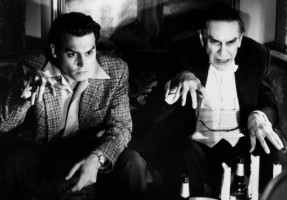
    Johnny Depp and Martin Landau in 'Ed Wood'
    Johnny Depp and Martin Landau in ‘Ed Wood’

    Never has a bad filmmaker been so celebrated than Edward D. Wood, Jr. And regardless of how fun his films may be to watch, Ed Wood was terrible at making movies. The stories are ridiculously bad, the acting is terrible, the dialogue is a joke. They’re just plain bad.

    But, somehow, they are really, really fun to watch.

    Ed Wood is probably as terrific a film about the man that could possibly be made. And finally, after so many false starts and promised release dates, this classic homage to the most popular bad filmmaker in history has arrived on DVD.

    Featuring the Oscar winning performance of Martin Landau, he alone makes this film worth watching. He does such a powerful and stunning job of bringing to life Bela Lugosi. Johnny Depp is also perfect as Ed Wood, both comical yet honest at the same time. Bill Murray’s supporting turn is pure gold, as well.

    What was amazing about Ed Wood was how he managed to get so many people to work with him on his idiotic films. They’re strange, they’re terrible, but somehow they believed in him. And Wood’s enthusiasm for what he was doing, regardless of the quality of his work, was admirable. He really loved making movies, and his friends were pulled in by that love, and apparently would follow him anywhere — they’ve even get baptized!

    The black and white visuals are presented with strong contrast. Tim Burton’s beautiful look for the film is preserved in this enhanced presentation. The unique soundtrack is in terrific surround sound. It’s the extras that leave a little to be desired.

    Johnny Depp and Sarah Jessica Parker in 'Ed Wood'
    Johnny Depp and Sarah Jessica Parker in ‘Ed Wood’

    First is the behind the scenes featurette, “Let’s Shoot This F#*%@r!”. Great title, and interesting to watch, but tells you nothing. Basically it is simply a collection of video shot on set during filming. But, there is no narration to tie it all together, no interviews. Nothing. And while it’s interesting to a point to watching Burton working with Johnny Depp and Martin Landau, you’re kind of left wondering — is this it?

    The doc is bookended by Depp in his belly dancer outfit from the film. It’s pretty funny, and pretty much lets you know precisely what this featurette is — a featurette how Ed Wood may have directed it. It’s bad, in the sense that it is a completely uninformative behind the scene featurette. But, fun to watching, in that you’re seeing moments between Burton and his actors that viewers often don’t get to see.

    “Pie Plates Over Hollywood” is slightly more revealing, if limited in its scope. The most intriguing documentary on the DVD is the one about the Theremin, the really cool instrument highlight in the film’s soundtrack. I’d never heard of the instrument, and watching it being used is just fascinating.

    A music video featuring the movie’s main theme is quite definitely the strangest part of the DVD. Very much like something Wood may have directed, especially in his later, soft-core porn years. A dancer in a Vampira outfit dances around to the 50s-like beat music. It reminded me very much of Wood’s film, Glen or Glenda, which features a very strange dream sequence with a woman on a couch.

    Very strange.

    There is also a selection of deleted scenes, none of which really added much to the film, which explains why they were excised. Although one scene, in which you meet Tor’s family, is pretty funny. And is probably one of the few moments where we’re taken out of the strange world of Ed Wood and given an outsider’s perspective via Tor’s wife.

    To learn anything of note about the film, you have to listen to the commentary. That’s where the real heart of the behind the scenes info can be found on the DVD. Featuring Burton, Landau, the writers Scott Alexander and Larry Karazewski, director of photography Stefan Czapsky and costume designer Colleen Atwood.

    At the end, Ed Wood is a touching love letter for a man who loved movies. It’s not important that his films were bad, Wood just loved making them.

  • ‘Don Juan DeMarco’ is about the spirit of romance

    ‘Don Juan DeMarco’ is about the spirit of romance

    Johnny Depp has a way with the ladies in 'Don Juan DeMarco'
    Johnny Depp has a way with the ladies in ‘Don Juan DeMarco’

    In most American movies leading men are not given emotional lives, they’re given emotional moments. Chiefly, they’re given tasks, even in romantic comedies — reclaim the prize, win the girl, slay the dragon. It’s the Alpha Male as hero. In this regard, the deeply-romantic comedy Don Juan DeMarco is a welcome exception.

    The film stars Johnny Depp as the title character, a patient in a mental facility who is either clinically insane, or the direct descendant of the legendary ladies man, Don Juan of Seville. Like his distant relative, DeMarco’s life revolves around romance.

    “There are only four questions of value in life,” DeMarco shares early in the film. “What is sacred? Of what is the spirit made? What is worth living for, and what is worth dying for? The answer for each is the same: only love.” It’s this wonderfully romantic notion that informs every scene in this mid-nineties gem.

    If Don Juan DeMarco came and went without much fanfare back in ‘95, there is only one explanation — sometimes the critics get it wrong.

    The film opens with the “Spanish nobleman” donning the last of his formal attire; a flowing cape, a black mask, leather gauntlets, etc. Focusing on these details, we could be in the age of gasping heroines and the dashing caballeros that crossed swords in their honor. Instead, the nobleman strides down the street of a modern metropolis. DeMarco’s voiceover explains that he’s the world’s greatest lover, he has made love to over a thousand women, has just turned twenty-one, and has chosen this night to die. His reason? A broken heart, of course. Before going bravely to his death, the dapper youth opts for one final “conquest.”

    Striding into a hotel restaurant, DeMarco approaches a woman awaiting her date; she’s been waiting for some time and welcomes the distraction.

    “I am Don Juan,” he smiles, sitting at her table.

    “And you seduce women?” she chuckles.

    “No,” he corrects politely. “I never take advantage of a woman. I give women pleasure, if they desire it. It is, of course, the greatest pleasure they will ever experience.” It’s quite a boast. But it gets her attention. Taking her hand, DeMarco draws an analogy between touching a woman’s fingers and touching her legs — rubbing the joints of the finger is like touching her knees, brushing further up the finger is like touching her thighs. When he kisses her hand at the knuckles, her eyes go sleepy with desire, and the implication is clear.

    “Every woman is a mystery to be solved,” DeMarco’s voiceover intones as the two make love in her dimly-lit hotel room. “But a woman hides nothing from a true lover.” With each image, DeMarco’s worship of the female form is clear. It’s that rare scene in American movies — a leading man focused on giving a woman pleasure, rather than using her for his. “I wonder,” DeMarco muses with a thick Castillion accent, “if the Stradivarius violin feels the same rapture as the violinist when he coaxes a single, perfect note from its heart?” With that the woman’s smiling mouth bursts open, matching the passionate cry of a lovely mariachi singer in the restaurant below.

    It’s this balance between humor and sensuality that writer-director Jeremy Leven (The Notebook) gets right from first scene to last.

    Back in the restaurant, DeMarco bows his goodbye to the woman, exits the restaurant, and tells us in voiceover, “Oh, well. Time to die.”

    Marlon Brando and Faye Dunaway in 'Don Juan DeMarco'
    Marlon Brando and Faye Dunaway in ‘Don Juan DeMarco’

    When we see DeMarco again, he’s standing on a catwalk above a giant billboard as police and onlookers gape from the street below. Enter screen legend Marlon Brando (The GodfatherApocalypse Now) as Dr. Mickler, a local psychiatrist. In an attempt to talk the jumper down, Mickler introduces himself to DeMarco as Don Octavio de Flores, a fellow nobleman. Soon after, Mickler has DeMarco admitted to the mental hospital where he works. Despite being two and a half weeks from retirement, Mickler requests the young man’s case, seeing the troubled youth as “a helluva swan song.”

    Word of DeMarco’s presence spreads fast, and in less than 24 hours Don Juan is having an affect on half the staff at the clinic. “Officially in his hacienda,” one doctor observes, “there are more nurses on valium than patients.”
    When DeMarco is prescribed drugs to combat his delusions, the young man protests.
    “Here’s the drill,” Dr. Mickler explains to him. “You’re on what they call a ten day paper, and for those ten days they can do whatever they think is appropriate.”
    “I am not deluded,” DeMarco insists. “I am Don Juan! And if you will not medicate me for these ten days, I will prove it to you.”
    And if Mickler is unconvinced?
    “Then I will take your medication,” DeMarco swears, “and you may commit me for as long as you like.”

    With that, the stage is set for DeMarco to draw the doctor in to his tales of love and adventure. It’s a wonderful tale of childhood curiosities, adolescent longings, elicit affairs, duels to the death, and a sexual adventure in the Middle East too priceless to give away here.

    While DeMarco’s romantic tales are the obvious “meat” of the movie, the film’s greatest pleasures come from the affect the tales have on the rotund Dr. Mickler. The usually staid doctor begins picking flowers in the hospital parking lot, listening to opera, regarding his wife of thirty-two years differently, and returning more eagerly to work each day.
    “This kid is fantastico,” Mickler tells the head administrator.
    “You do intend to give him medication?”
    “If I give him medication,” Mickler protests, “I’ll never be able to get into this world of his, and it’s a wonderful world!”

    What’s difficult to convey here is just how funny Don Juan DeMarco really is without giving away the film’s sweetest pleasures. There is so much humor, one could argue the romantic comedy tips more toward comedy than romance. In truth, the film gives generously to both genres. Best of all, Don Juan DeMarco builds to an ending so sweetly magical and joyously romantic that the entire endeavor is raised to the level of fable in its final passage.

    Faye Dunaway (Network) is wonderful here in the role of Mickler’s wife, Marilyn. It’s a slight role that might have gone unnoticed without Dunaway’s considerable charm and beauty. She and Brando share an on-screen chemistry that serves the film well. Unlike Brando’s doctor, Dunaway’s Marilyn takes comfort in their unbroken, daily routines.

    “I just feel,” Mickler confesses in bed, “as though we’ve surrendered our lives to the momentum of mediocrity. I mean, what happened to all the celestial fire that used to light our way.”
    “Fires are a lot of trouble,” she tells him. “A good, steady, long glow. That does the trick over the long run.”
    “No fire,” Mickler objects, “no heat. No heat, no life! That’s the equation.”
    “What is going on?” Marilyn asks. “You’ve been acting funny lately.”
    “I’ve been treating this kid…he thinks he’s Don Juan.”
    “So, who is he, really?”
    “I don’t know,” Mickler sighs. “But he’s getting to me.”

    As the day of Dr. Mickler’s retirement draws near, facts begin to surface that throw the don’s romantic stories into question. A grandmother in Queens contradicts the young man’s claims, replacing key facts with decidedly unromantic details. It seems certain, if the grandmother is to be believed, that DeMarco is delusional. With less than 24 hours remaining to complete his diagnosis, Mickler’s convinced his charming young patient will have to be committed. Until… we won’t reveal that here.

    At its heart, Don Juan DeMarco isn’t about seduction, though there is plenty of that. It isn’t about sex, though there is that too (albeit a PG-13 brand of nookie). At its heart, Don Juan is about the spirit of romance that lives equally in all of us, regardless of age, appearance, or the length of our relationships.

    The film’s score stands out among the best of the late, great Michael Kamen (a huge loss to the industry). Equally tender and grand, Kamen’s score draws inspiration from the golden age of Hollywood. By combining a full orchestra with traditional Spanish instrumentation, Kamen set the film’s passionate tone from the very first shot of the film.

    Kamen’s score has been given its own isolated track on New Line’s DVD release. Viewing any film with an isolated soundtrack brings a composer’s every choice into high relief. Admittedly, watching the isolated track without the benefit of commentary from the composer is like watching a silent movie that’s inconsistently supported by an orchestra. Without the ability to click from musical cue to musical cue, viewers must sit through long passages of the film in silence, which I can’t imagine myself, or anyone in the general public, doing. Better, I think, to purchase the A&M recording of the soundtrack, which is still widely available. I’ve owned it since the film’s release, and its terrific.

    Other elements on the DVD include animated menu screens. In a first for this reviewer, the image driven scene selection menu features a “preview” option. Previews play in the small menu window with full audio, and are very well chosen. The DVD also contains the original stateside trailer, which seems more concerned with selling Depp as a sex object than it is with selling the film as a whole. What’s up with New Line and their trailers (see Torch Song Trilogy review)?! Assuming foreigners are more sensitive, the studio’s international trailer does a much better job of conveying the film’s romantic core.

    Also in the extra section are cast bios for Depp, Brando and Dunaway. These bios feature odd facts about the cast, like the fact that Brando lives like a recluse in a Polynesian atoll once owned by that country’s royal family. Bios of Depp and Brando include clips from other movies that both, I’m sure, are trying to forget. While Depp’s appearance in two Nightmare on Elm Street films seem quaintly cheesy today, Brando’s clip from The Island of Doctor Moreau is so embarrassing one wonders if it was chosen by someone who hated him. It comes as no surprise that all three films are New Line productions.

    The DVD also features language and subtitle options, a music video featuring a pop version of Kamen’s love theme as performed by Bryan Adams, and the option to view the film in fullscreen or widescreen formats.