
‘Michael’ doesn’t truly reflect the Man in the Mirror
“The first half of our lives are ruined by our parents, and the second half by our children.” – Clarence Darrow
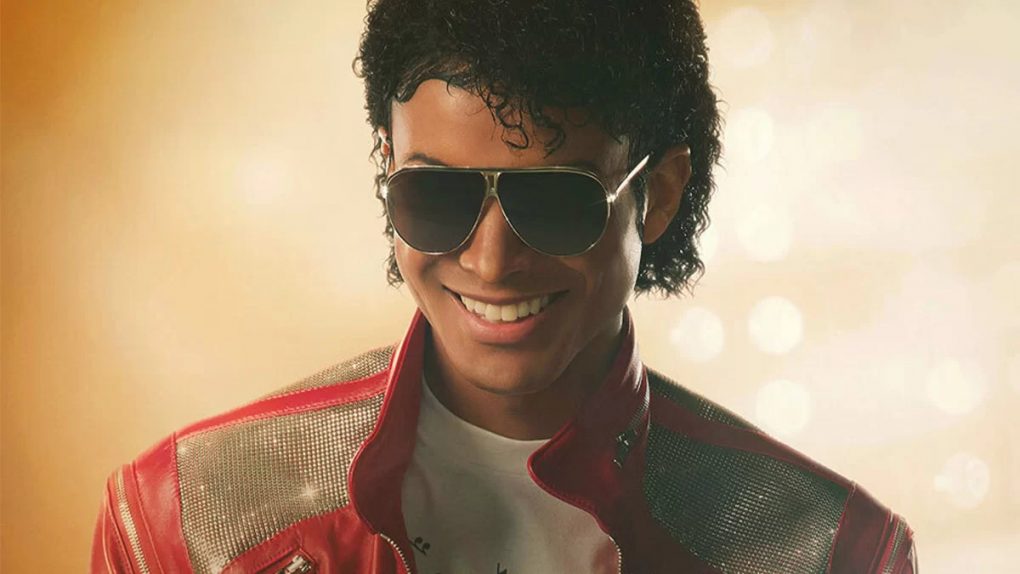
Emphasis on “first half” there, because that’s all you’re getting with Michael. Starting with the Jackson 5 gaining momentum and ending on tour for Bad, the film promises a close look at the one and only Michael Joseph Jackson (Juliano Valdi as a kid and thereafter by Jaafar Jackson, his nephew), but keeps the glove on.
I’ve said before that films about true stories need to be, well, true. That goes doubly for these pop music biopics. If you’re getting something wrong that a Behind the Music episode gets right, you’ve failed. I couldn’t tell you offhand what precisely has been fudged here, but given the family’s involvement down to the very star of the picture, this is hardly an impartial account.
Even for a first-parter with a limited scope, it’s tremendously lacking. Did you want to learn about the production of The Wiz? His friendship and fallout with Paul McCartney? How Weird Al convinced him to be the subject of parody? What brought about “We Are the World” and the extent of his involvement? Anything to do with Janet? All of it M.I.A.
While the real King of Pop had tons of celebrity friends and encounters, you’d never know it from this movie. Having kept tabs on the IMDB page in the months leading up tp release, I recall that Diana Ross, Johnnie Cochrane, John Lennon, Dick Clark, Andy Warhol, Mick Jagger, David Bowie, Robert Mapplethorpe, and Liza Minnelli were supposed to be in here. Yes, some of these figures frequently turn up in films depicting this era, but Mike’s interactions with them would surely be different from Jean-Michel Basquiat’s. Sheryl Crow (Emily Zapotocny), who was one of his backup singers before striking out on her own, and Brad Buxer (Johnny Rossa), the keyboardist who might be best known to fans as a main collaborator of Jackson’s on the Sonic 3 soundtrack, are still here but not explicitly referred to as such. We do see him with Berry Gordy (Larenz Tate) and Gladys Knight (Liv Symone), and Deon Cole is a bit of fun as Don King (yes, he factors into this story, too. Only in America…).
There’ll be setups lacking payoffs. We see Michael watching Vincent Price, then cut to making the “Thriller” video, not once mentioning that he got the actual Price on the track. Sometimes it’ll go from point A to C and forget about B, assuming the audience can fill in the thematic gaps. There’s a scene set in 1971 where Michael is playing with a pet rat. Another scene set some years later shows him performing “Ben” in concert. Yet the important context here – the song is actually the Oscar-nominated title track to the 1972 movie about a boy and his pet rat, and which was MJ’s very first hit as a solo artist – is completely absent.
Cutting from his burn recovery to performing “Bad” on stage is utterly baffling. The making of its album (which was arguably even more revolutionary than Thriller) could have filled a feature film all on its own, but instead is completely ignored. And that means nothing about the video for “Bad,” which saw him acting opposite Wesley Snipes and under the direction of Martin Scorsese. If there’s any of the Gloved One’s videos during this timeframe that warranted a making-of dramatization, it’s this one.
If it seems like I’m not discussing Michael’s actual character, it’s because I have little to work with. The audience is meant to assume that spending a good deal of childhood as a professional musician and taking the brunt of the abuse from his vicious father (Colman Domingo) are what led to his arrested development, yet this not only feels like an oversimplification for someone with deeper complexities, but the film has no interest in showing how it shaped his artistic process. While one might think that looking at the lyrics to “Thriller” and knowing about his upbringing makes the inspiration and meaning obvious, the movie can’t even make that connection, reducing the track to the kitchy Halloween novelty song the layperson thinks of it as.
Credit where it’s due, though: the actors assembled are extraordinary. Jaafar channels his uncle so well it’s uncanny, Domingo is so good that you wish they had let him be as much of a monster as the real Joe was, and Miles Teller as John Branca shows a new, somewhat Cusack-like side of himself. But the standout is Nia Long as Katherine, superbly conveying the conflict within. Additionally, the music itself is recreated faithfully and covers a larger breadth of the Jackson catalogue than expected.
“His story continues,” the audience is told at the end, and knowing what we do about the actual Wacko Jacko, boy does it ever. The sparkly gauntlet now thrown for a real challenge, we will have to see if the filmmakers can beat it.
